
When the problem is volume that has gone.
in Jonesboro, AR.
Labia puffing restores volume to the outer labia, using either your own fat or PRP. Two routes to the same complaint.
Labia puffing restores volume to the labia majora, the outer lips, where the area has become flat, hollow or crepey with age, weight loss or after childbirth. It is done either by fat transfer, using fat harvested from elsewhere on your body, or with PRP prepared from a small sample of your own blood. Both are done at Lux Lipo in Jonesboro, Arkansas, and cost is quoted at your consultation.
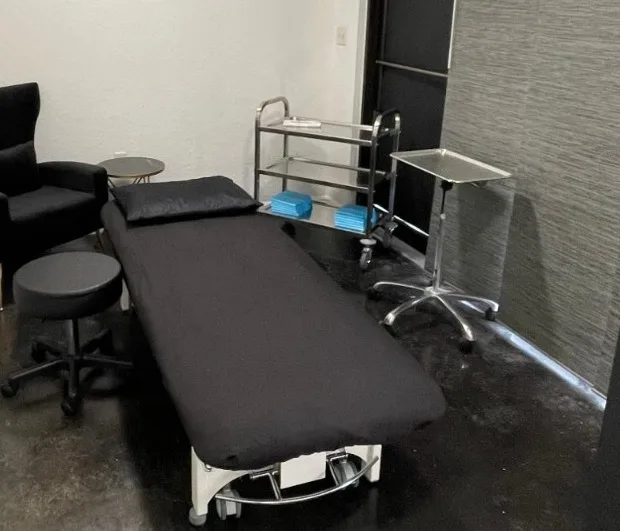
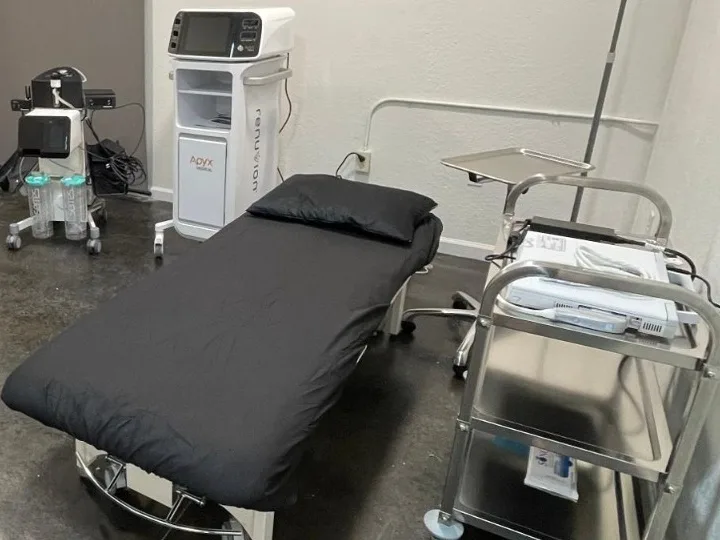
Here’s exactly what happens at a first visit — and you can come and see the place before you book anything.
Adding volume back, using your own tissue.
The labia majora lose volume over time. Weight loss, childbirth and age all empty the area out, leaving skin that looks flat, hollow or finely wrinkled rather than loose.
Labia puffing restores that volume using material from your own body. Nothing manufactured is placed. There are two routes, and which one suits you is the main thing the consultation decides.
The difference that matters.
Fat transfer. Fat is harvested from an area where you have it to spare by liposuction, purified, and placed where volume is wanted. It moves tissue from one part of you to another, so it treats two areas in one visit and adds real bulk. A proportion of the transferred fat is reabsorbed, and what remains after the first few months is what you keep.
PRP. A small sample of your blood is taken and processed to concentrate the platelet-rich portion, which is then placed into the tissue. There is no donor area and no liposuction, so it is a smaller undertaking, and the effect is more modest and more about tissue quality than bulk.
Fat suits you if there is real volume to replace and you have somewhere to take it from. PRP suits you if the change wanted is subtle, or if there is not enough fat to harvest. Your physician will tell you which applies rather than defaulting to either.
Flat or hollow, not loose.
This is probably you if the outer labia look deflated, if skin there has become finely wrinkled or crepey, if the area lost its shape after weight loss, or if it simply looks emptier than it used to and that bothers you.
It is also you if the concern is comfort: less padding in the area can make sitting, cycling and some clothing less comfortable than it was.
This probably is not the right procedure if the problem is excess skin that hangs or folds rather than lost volume. Adding to that makes it worse, and reducing is the answer instead. More about labia majoraplasty.
Numbed, awake, private.
Both routes are done under local anesthetic with you awake. Most women describe pressure and movement rather than pain, and you can say at any point that you want to stop.
With fat transfer, the donor area is numbed too, and that part feels like liposuction: pressure and movement rather than pain. The room is private and you can bring someone with you.
What happens, in order.
-
A private consultation, where the area is assessed only if you agree to it, and the fat or PRP question is settled.
-
Local anesthetic to numb the area, and the donor site as well if fat is being used.
-
For fat: it is harvested through tiny incisions, purified, and placed in layers where volume is wanted. For PRP: a blood sample is taken, processed, and placed into the tissue.
-
Aftercare instructions.
-
Review as it settles, because volume changes over the first months.
Two areas with fat, one with PRP.
With fat transfer you have a donor area and a treated area. The donor area follows the liposuction pattern: swelling, bruising, soreness and some fluid drainage from the small incision sites in the first 24 to 48 hours, with a compression garment as instructed. The treated area is mostly swollen.
With PRP there is no donor area, so the recovery is limited to the treated area.
Restrictions afterwards, including exercise and sex, are given to you by your physician at the appointment rather than published here.
Some of the fat stays. PRP is subtler.
With fat transfer, a proportion is reabsorbed because transferred fat needs a blood supply to survive. What remains after the first few months is generally what you keep, and it then behaves like the rest of your body, responding to weight change.
With PRP the change is more modest and more gradual, and it is generally repeated rather than permanent.
Swelling has to settle before either is judged. Individual results vary.
Cost is quoted in writing at your consultation.
Cost depends on the treatment plan you and your physician settle on, so we quote it at your consultation rather than guessing here. We offer financing.
We see patients from Jonesboro, Paragould and across Northeast Arkansas, and some travel from the Missouri Bootheel.
What to weigh up.
Common and temporary: swelling, bruising, tenderness and, with fat transfer, soreness at the donor area. Less common: infection, a reaction to the anesthetic, asymmetry, firm areas or lumps where fat did not survive evenly, changes in sensation, or more reabsorption than hoped, which can mean a second session.
With PRP, the material comes from your own blood, so the risks are mostly about the injection rather than the material itself.
Your physician goes through all of this before you decide.
Dr. Chug does most of the fat transfer work.
Dr. Rohit Chug, MD, a cosmetic physician, performs most of our fat-transfer work. Dr. Vaibhav Desai, MD, a physician member of the American Academy of Cosmetic Surgery, performs the rest and oversees every plan.
What to ask any provider, including us.
Useful questions anywhere you go: is my problem lost volume or excess skin? Would you use fat or PRP for me, and why that one? How much do you expect to survive, and what happens if less does? How many of these do you perform in a month? What is the aftercare? Would this need repeating, and how often? Who handles the follow-up?
Northeast Arkansas and the Bootheel.
We are at 3800B S Caraway Rd in Jonesboro, and women travel to us from Paragould, Trumann, Walnut Ridge, Newport, Corning, Blytheville and Batesville, and from Kennett, Sikeston and Poplar Bluff in Missouri.
Because volume settles over months, plan the review visit in when you book if you are travelling.
Shown privately, never published.
We do not publish photographs of this procedure on the site. Ask at your consultation and the physician can show you comparable cases privately. Clinical photographs of you stay in your record and only with your written permission.
We show before-and-after photographs in person.
Every photograph we publish is published because a patient signed a written release, and most people would rather we did not. At your consultation the physician will show you pairs that match your own body and the treatment being discussed — which is more use to you than a page of strangers. Individual results vary.
Nobody has to know you came in.
A lot of what we treat — dryness, leaking, discomfort, how things look — people don’t say out loud, even to their doctor. These pages exist so you can get an answer without asking a person. When you’re ready, this is what a visit looks like.
You never have to say it out loud. Book online and pick a consultation — you don’t have to explain anything to anyone at the front desk. The first person you discuss it with is the physician.
A private room, and a physician in it. A physician examines you and answers your questions — not a coordinator. Bring someone with you or come alone — whichever makes it easier.
You can stop at any point. A consultation is a conversation, not a commitment. Plenty of people come in, ask everything, and decide not to do anything. That’s a fine outcome.
Your file is your file. HIPAA applies to everything here. No photo of you is ever used anywhere without your written consent, and you can withdraw it later.
Asked at the desk, answered here.
Medically reviewed by Dr. Vaibhav Desai, MD. If yours is not here, call (870) 230-0844 and ask — nobody will try to book you for asking a question.
What is labia puffing?
It restores volume to the labia majora, the outer lips, where the area has become flat or hollow. It uses either fat harvested from elsewhere on your body, or PRP prepared from a small sample of your own blood.
Should I have fat transfer or PRP?
Fat adds real bulk and suits you if there is genuine volume to replace and somewhere to harvest from. PRP is a smaller undertaking with a more modest effect and no donor area. Your physician will tell you which fits what you are describing.
What is PRP?
Platelet-rich plasma, prepared by taking a small sample of your blood and concentrating the platelet-rich portion. It comes from your own body, so nothing foreign is placed.
Is this the same as a labia majoraplasty?
No, and they are opposite treatments. A majoraplasty removes excess skin that hangs. Labia puffing adds volume where the area is flat or hollow. Adding volume to loose skin would make it worse.
Does all the fat survive?
No. A proportion is reabsorbed because transferred fat needs a blood supply. What remains after the first few months is generally what you keep, and how much that is varies from person to person.
Will it need repeating?
PRP is generally repeated rather than permanent. With fat, a second session is sometimes discussed if more was reabsorbed than hoped, usually not before a few months so you are judging a settled result.
How long is the recovery?
With fat transfer there is a donor area as well, which follows the liposuction pattern including fluid drainage in the first 24 to 48 hours and a compression garment. With PRP the recovery is limited to the treated area. Your physician gives you the specifics.
What does it cost?
Cost depends on which route you take and what is involved, so we quote it at your consultation rather than guessing here. Financing is available.
Come in.
Or book ahead.
A consultation is a conversation, not a commitment. We'll tell you honestly what's realistic for you.
Lux Lipo · 3800B S Caraway Rd, Suite 8, Jonesboro, AR 72401